
Breast prosthesis (implant) exchange (Breast prosthesis exchange) or (prosthesis change)
Some women who have previously had prostheses/implants inserted into their breasts may, after a while, want something different, such as either increasing or decreasing volume, changing shape, or combining prostheses with their own fat, the so-called hybrid procedure. ( see separate information here ).
The reason for this can be several, such as after breastfeeding, weight change or sagging breasts where a breast lift is also performed. Asymmetry can occur, having been performed
incorrect placement of the prosthesis or a hard membrane has formed around the prosthesis, so-called capsular contracture.
The degree of capsular contracture varies from 1 to 4, and the most severe type (3 and 4) occurs in 5-8% of women who have implants. The reason for this has to do with how the body reacts to silicone as a foreign body. This can be both cosmetically and physically troublesome, such as tenderness and pain. Capsular contracture is not dangerous, but the breasts can become hard, tender and in some cases painful. If the breast implants are to be removed due to severe capsular contracture, the surgeon will want to remove both the implants and the scar tissue (capsule) around the implant. Some people may experience silicone leakage in the form of nodules or reduced volume, which can be examined
with ultrasound or MRI.
For more information about our expertise and publications on breast implants, please see 4 attachments under the treatment Breast Augmentation with Implants .
How is a prosthesis replaced?
The procedure itself takes about 1-1 ½ hours, under deep sedation. Depending on the type/degree of the capsule that has formed, it is considered whether to remove the entire capsule or only parts of it.
the capsule – which is easier. The incision is usually made where the old scar is, this is to avoid creating new scars. After removing the old prosthesis, the same cavity will be used for the new prosthesis, possibly also filled with the patient's own fat. In some cases where only the prosthesis is removed or replaced with a new one, it may be enough to just split the
the capsule from the inside, this creates more space for the new prosthesis.
During surgery, thorough homeostasis is performed to stop bleeding, as capsule removal can cause minor bleeding. Replacement of the prosthesis can easily be combined with fat grafting with fat or breast lift. Whether this should be performed at the same time is discussed in consultation with the surgeon during the consultation. It is often
drain in the pocket, which is usually removed 1-2 days after surgery.
Pick-up and accommodation
You must arrange in advance with someone to pick you up from the clinic approximately 1 hour after the surgery, as you cannot drive, take public transport or taxis on your own. You must also have someone with you on the same day and the first night.
If you live far from the clinic, we recommend that you stay overnight in Oslo, either with family/friends or in a hotel with a relative.
Hotels near Oslo Plastic Surgery;
Hotel Gabels Hus in Gabelsgate 16.
Frogner House Apartments, Bygdøy Allé 53.
(We have an agreement with Frogner House Apartments. Please inform us when booking a room)
Before the operation
You must be healthy on the day of the operation. If you are in doubt whether you have a cold or similar, you must contact us. The operation is not performed when you have the flu with fever, cough or other infection in the body. Before the operation you will receive a prescription for antibiotics, possibly painkillers and Hibiscrub solution 40 mg/ml which you can buy at the pharmacy.
The day before surgery and on the day of surgery, you should wash your entire body with Hibiscrub solution in the shower. This is a disinfectant soap that should be rinsed off with water, and the skin should be dried with a clean towel. Put on clean clothes when you leave home. Do not use perfume or cream. All jewelry, piercings and nail polish must be removed no later than the day before surgery and may be put back on 7 to 10 days after surgery.
To get the best possible result and to avoid complications, it is recommended that you have a normal weight, and not an excessively high BMI. If you smoke, or use nicotine such as snus or electronic cigarettes, you must quit at least 2 weeks before the surgery and 2 weeks after the surgery.
You should arrive at the surgery fasting. This means that you should not eat food including fruit or drink juice with pulp or dairy products 6 hours before the surgery. You can drink water, juice, juice without pulp or coffee/tea without dairy products or chew gum/drops/throat lozenges up to 4 hours before the surgery. Medications that you may need to take on the day of surgery can be swallowed with 1 glass of water max. 100 ml up to 1 hour before the start of anesthesia.
You must arrange in advance with someone to pick you up from the clinic approximately 1 hour after the surgery, as you cannot drive, take public transport or a taxi alone.
It is important that you stop taking blood-thinning medications about 14 days before the operation, preferably after consulting your GP or us. For other medications, consult the clinic before the operation. A lot of garlic and health food preparations should also not be consumed.
If you are going to have breast implants inserted, are over 40 years old and it has been a long time since you have had your breasts examined, it may be appropriate to have a mammogram before the surgery.
On the day of surgery
You will be received by our staff who will prepare you for the operation before the surgeon sees you. Before the procedure itself, the surgeon will go over the procedure, draw up the plan, and answer any questions you may have. Anesthesia personnel will also come to greet you and answer your questions. When the operation is about to begin, the operating room nurse will pick you up
and wash the surgical area while the anesthesia personnel give you a sedative in your arm so that you sleep during the operation. In addition, the surgeon puts local anesthesia in the surgical area for a long-lasting pain relief effect in the surgical area after the operation, which also reduces bleeding in the area. After the operation, you will be moved to the recovery room where you will have your own bed.
You will then rest for 1-2 hours and will be served food and plenty of drinks in the form of bread, yogurt and juice (remember to inform about allergies). Painkillers may be given if necessary. The surgeon will see you before your return home / hotel stay and you will be assessed by an anesthesiologist before you travel home with an adult companion. The PVK attached to your hand will be removed before you leave.
You must use a car or taxi as your means of transportation after surgery, we do not recommend public transportation or walking. You will also need a companion to pick you up.
During the operation itself
A silicone prosthesis is inserted into the pocket via the old scar, of a size and shape that the patient and surgeon have chosen before the operation. The choice is made based on what suits the patient's
anatomy and will provide the best aesthetic result.
The ability to breastfeed is not normally affected by the surgery, nor is the possibility of mammography screening. Breast augmentation also does not increase the incidence of breast cancer. (see more under FAQ)
After the operation
All patients will come for a post-operative check-up the day after surgery. We recommend that you do not travel by air for the first 48 hours after surgery. During this time, a check-up appointment will be arranged at the clinic and you will come for a check-up at the clinic the day after surgery.
The first few hours after the operation you may feel a little tired, and sometimes a little nauseous. It is important that you take painkillers as prescribed and as needed, and make sure to drink plenty of fluids during the first 24 hours. You may feel dizzy, so it is a good idea to take your time when getting up and make sure you have something to support yourself on.
For the first two days you should rest and lie as still as possible, with your upper body elevated. For the next five days you can move carefully. If you have an active job, it is a good idea to stay home. After the operation you will be given a special bandage that will be removed after 3 days, the tape will remain on for 2 weeks. You will wear a sports bra for 6 weeks after the bandage is removed. After the tape is removed (after 2 weeks) you can shower the area and apply new tape.
It is recommended that you tape the scars with skin-friendly tape.
at least 2 months. Skin-friendly surgical tape such as Micropore or Steri-Strips can be purchased at the pharmacy, or silicone tape if you react to regular surgical tape.
We close the wound with stitches that dissolve on their own. We usually do not insert drains (tubes), only in very rare cases are they inserted to remove blood and fluid from the wound area under the breast.
These are usually removed in the clinic 1-2 days after surgery.
The final result can only be assessed after 3-6 months. Follow-up checks are arranged with the clinic; the day after surgery, after 1-2 weeks and 3-6 months. as well as a final check after a year. You must call to arrange the checks yourself, or make an appointment with the clinic on the day of surgery.
Bleeding and infection are uncommon and in very rare cases require reoperation and/or antibiotic treatment. Complications of anesthesia, such as allergic reaction to
anesthetics, are extremely rare.
In principle, prosthesis replacement does not provide grounds for sick leave, but if you have a physical job, we recommend that you take this into account in the first few days after surgery.
Physical exercise and hard physical work should be avoided for about 2 weeks.
The scars are often red, itchy and hard at first, but over time they will fade and soften. The scars are, however, hidden by a bra and will not be visible in low-cut dresses. In rare cases, the scars can become wide and clearly visible, this depends on the woman's own inherited skin characteristics. We therefore recommend that you tape the scars for a couple of months after a breast augmentation. Plaster tape is available at pharmacies.
If correction is necessary due to complications or unsatisfactory results, this will be done free of charge within one year, provided there is a medical indication and a clear improvement potential. This is our guarantee period.
On this page you will find:
Ask for guidance and advice
The best advice we can give face to face. We will guide you to the best solution for you.
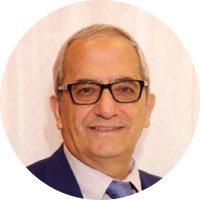
The responsible physician is Dr. Amin Kalaaji , MD, specialist in plastic surgery and clinic manager at Oslo Plastic Surgery, and head of the Norwegian Society for Aesthetic Plastic Surgery (NFEP) 2018-2020.
Dr. Kalaaji holds many positions and gives lectures and trainings around the world. This benefits all our patients as he is always up to date on the latest and most advanced treatments and surgical techniques.
Patient safety, high quality and individual treatment always have the highest priority at Oslo Plastic Surgery.
FAQ - Frequently Asked Questions
When you have breasts with older prostheses.
When you have a hard and painful capsule formation and a negative change in breast shape.
In case of volume difference between the breasts/breast asymmetry.
By entering the scar from the insertion of the prosthesis. The old prosthesis is removed together with the capsule in cases of capsular contracture. A new silicone prosthesis and possibly fat is inserted of a size and type that has been determined in collaboration with the patient before the operation.
Yes, you can easily combine the exchange of breast implants with, for example, breast augmentation. And or
fat transplantation. This is agreed with the surgeon prior to the operation.
For the first 6 weeks, you should only wear a sports bra, and for the first 3 weeks, both day and night, together with a chest strap. Avoid underwire bras for the first 6 months.
You can shower your body after the surgery, but avoid the bandage that will be on for 3 days, we recommend that you wait until after this. After 2 weeks, you should shower the chest area and apply new surgical tape Micropore or Steri-Strips that can be purchased at the pharmacy.
Normally, you can exercise carefully after 2 weeks, and you should use your arms carefully during the same time. That is, do not lift your arms high or carry heavy things.
You can return to work two to three days after the procedure, as long as you do not have hard physical work. Normally, sick leave is not required for breast surgery, but we will issue a certificate of medical examination and treatment upon request.
All patients must undergo a consultation before surgery. The consultation is conducted by our experienced plastic surgeon who will ask you questions about your medical status; past or current illnesses, previous surgeries, use of medications, etc. An examination is then performed, and the surgeon considers a possible operation.
If you are suitable for surgery, you will receive information about the surgery itself, precautions to take before and after the procedure, and you will get answers to your questions.
For patients with long travel distances, we offer consultation via telephone and/or video consultation.
We will then send you a health information form in advance, which you must fill out and return to us before the consultation. You will also send us some photos.
Should surgery be necessary, the surgeon will conduct a thorough assessment the day before the planned surgery.
You must be healthy on the day of surgery. If you are in doubt whether you have a cold or similar, you must contact us. The operation is not performed when you have the flu and/or fever or cough or other infection in the body. You will be received by our staff who will welcome you and together prepare you for the operation before the surgeon looks at you before the procedure and draws up the planned procedure, as well as answer your questions. Anesthesia personnel will also come to greet you and answer your questions. After the operation, you will be served food and plenty of drinks in the form of bread, yogurt and juice (let us know if you want a different diet/have allergies).
In Norway, it is not allowed to show before and after pictures of silicone from cosmetic procedures in marketing or on the clinic's website. However, we can show you beautiful pictures from previous patients when you come for a consultation with the surgeon. This can be very helpful when we discuss the size of the implant, and it can make it easier for you to imagine an expected result.
We can also offer a preliminary examination with a 3D imaging system. We take pictures of your body and can use image simulation to show you what an expected result will look like with different sizes and implant types.
If correction is necessary due to complications or unsatisfactory results, this will be done free of charge within one year, provided there is a medical indication and a clear improvement potential. This is our one-year warranty agreement.
Oslo Plastic Surgery uses the renowned Mentor Memory Gel implants. They are available with smooth or textured surfaces and with moderate to ultra high profiles. You will decide in consultation with your surgeon which implant is right for you.
You can get the implants with different types of gel. Mentor is a CE and FDA approved implant. The implants have a lifetime warranty in case of leakage (i.e. they replace the implant itself), and they also provide a subsidy for the surgery in case of leakage within 10 years.
Attachment:
Please read our own publications about breast implants in both Norwegian and English.