

Breast lift (mastopexy)
A breast lift is intended to lift and tighten the breasts, which may have changed as a result of breastfeeding and/or weight changes or just normal aging. Those who only have sagging breasts often only need a breast lift without reduction or possibly combined with the insertion of prostheses or their own fat.
Breast lift is performed in a similar way to breast reduction in that the excess skin is usually removed, the nipple is moved and the glandular tissue is shaped. The scars are around the nipple, or possibly also vertically down. The scars are then smaller with a breast lift than with a breast reduction.
Sometimes it is necessary to insert an implant (prosthesis) during a breast lift operation when there is not enough volume in the sagging breast. This is clarified in advance during a thorough consultation where the remaining breast volume and your wishes are taken into account (see info about breast lift combined with breast prosthesis ).
To get the best possible result and to avoid complications related to breast lift, it is recommended that you have as normal a weight as possible. If you smoke, you must quit at least 1 week before the surgery and be smoke-free for 2 weeks after the breast lift.
The ability to breastfeed is not normally affected by the techniques we use for breast lifts. Nipple sensation can sometimes be lost or reduced, but it often returns. We usually close the wound with stitches that dissolve on their own. It may be necessary to insert a drain (tube) to remove blood and fluid from the wound area under the skin. These are usually removed after 1-2 days at the first check-up. Breast lifts do not require sick leave.
Pick-up and accommodation
You must arrange in advance with someone to pick you up from the clinic approximately 1 hour after the surgery, as you cannot drive, take public transport or taxis alone. You must also have someone with you on the same day and the first night.
If you live far from the clinic, we recommend that you stay overnight in Oslo, either with family/friends or in a hotel.
Hotels near Oslo Plastic Surgery;
Hotel Gabels Hus in Gabelsgate 16.
Frogner House Apartments, Bygdøy Allé 53.
(We have an agreement with Frogner House Apartments. Please inform us when booking a room)
Before the operation
You must be healthy on the day of the operation. If you are in doubt whether you have a cold or similar, you must contact us. The operation is not performed when you have the flu with fever, cough or other infection in the body. Before the operation you will receive a prescription for antibiotics, possibly painkillers and Hibiscrub solution 40 mg/ml which you can buy at the pharmacy.
The day before surgery and on the day of surgery, you should wash your entire body with Hibiscrub solution in the shower. This is a disinfectant soap that should be rinsed off with water, and the skin should be dried with a clean towel. Put on clean clothes when you leave home. Do not use perfume or cream. All jewelry, piercings and nail polish/false nails must be removed at the latest the day before surgery and may be put back on 7 to 10 days after surgery.
To get the best possible result and to avoid complications, it is recommended that you have a normal weight, and not an excessively high BMI. If you smoke, or use nicotine such as snus or electronic cigarettes, you must quit at least 2 weeks before the surgery and 2 weeks after the surgery.
You should arrive at the surgery fasting. This means that you should not eat food including fruit or drink juice with pulp or dairy products 6 hours before the surgery. You can drink water, juice, juice without pulp or coffee/tea without dairy products or chew gum/drops/throat lozenges up to 4 hours before the surgery. Medications that you may need to take on the day of surgery can be swallowed with 1 glass of water max. 100 ml up to 1 hour before the start of anesthesia.
It is important that you stop taking blood-thinning medications about 14 days before the operation, preferably after consulting your GP or us. For other medications, consult the clinic before the operation. A lot of garlic and health food preparations should also not be consumed.
You must arrange in advance with someone to pick you up from the clinic approximately 1 hour after the surgery, as you cannot drive, take public transport or a taxi alone.
On the day of surgery
You will be received by our staff who will prepare you for the operation before the surgeon sees you. Before the actual procedure, the surgeon will go over the procedure, draw up the plan, and answer any questions you may have. Anesthesia personnel will also come to greet you and answer your questions. When the operation is about to begin, the operating room nurse will pick you up and wash the surgical area while the anesthesia personnel will give you a sedative in your arm so that you are asleep during the operation. In addition, the surgeon will put local anesthesia in the surgical area for a long-lasting pain relief effect in the surgical area after the operation, which also reduces bleeding in the area.
After the operation, you will be moved to the recovery room where you will have your own bed. You will then rest for 1-2 hours and will be served food and plenty of drinks in the form of bread, yogurt and juice (remember to inform about allergies). Painkillers may be given if necessary.
The surgeon will see you before your return trip/hotel stay and you will be assessed by an anesthesiologist before you travel home with an adult companion. The PVK attached to your hand will be removed before you leave. You must use a car or taxi as a means of transportation immediately after surgery, we do not recommend public transportation or walking.
After the operation
All patients will come for a post-operative check-up the day after surgery. We recommend that you do not travel by air for the first 48 hours after surgery. During this time, a check-up appointment will be arranged at the clinic and you will come for a check-up at the clinic the day after surgery.
The first few hours after the operation you may feel a little tired, and sometimes a little nauseous. It is important that you take painkillers as prescribed and as needed, and make sure to drink plenty of fluids during the first 24 hours. Some people may feel a little dizzy, so it is a good idea to take a few minutes when you get up. For the first two days you should rest and lie as still as possible, with your upper body elevated. For the next five days you can move carefully. If you have an active job, it is a good idea to stay home. After the operation you will be given a special bandage that will be removed after 3 days, the tape will be left on for 2 weeks. We will close the wound with stitches that will dissolve on their own. You will wear a sports bra for 6 weeks after the bandage is removed. After the tape is removed (after 2 weeks) you can shower the area and apply new tape. It is recommended that you tape the scars with skin-friendly tape for at least 2 months. Surgical tape such as Micropore or Steri-Strip can be purchased at the pharmacy, or alternatively silicone tape.
The final result can only be assessed after 3-6 months. Follow-up checks are arranged with the clinic; the day after surgery, after 1-2 weeks and 3-6 months, as well as a final check-up after a year. You must call to arrange the check-ups yourself, or make an appointment with the clinic on the day of surgery.
Bleeding and infection are uncommon and in very few cases require reoperation and/or antibiotic treatment. Anesthesia complications, such as allergic reactions to anesthetics, are extremely rare.
In principle, a breast lift does not require sick leave, but if you have a physical job, we recommend that you take this into account in the first few days after surgery.
Physical exercise and hard physical work should be avoided for about 4 weeks.
The scars are often red, itchy and hard at first, but over time they will fade and soften. The scars are, however, hidden by a bra and will not be visible in low-cut dresses. In rare cases, the scars can become wide and clearly visible, this depends on the woman's own inherited skin characteristics. We therefore recommend that you tape the scars for a couple of months after a breast augmentation. Plaster tape is available at pharmacies.
If correction is necessary due to complications or unsatisfactory results, this will be done free of charge within one year, provided there is a medical indication and a clear improvement potential. This is our guarantee period.
Ask for guidance and advice
The best advice we can give face to face. We will guide you to the best solution for you.
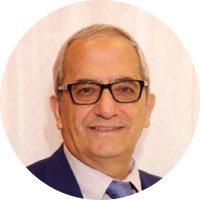
The responsible physician is Dr. Amin Kalaaji , MD, specialist in plastic surgery and clinic manager at Oslo Plastic Surgery, and head of the Norwegian Society for Aesthetic Plastic Surgery (NFEP) 2018-2020.
Dr. Kalaaji holds many positions and gives lectures and trainings around the world. This benefits all our patients as he is always up to date on the latest and most advanced treatments and surgical techniques.
Patient safety, high quality and individual treatment always have the highest priority at Oslo Plastic Surgery.
Questions & Answers
Breast lift is suitable for those who have sagging and sagging breasts.
All patients must undergo a consultation before surgery. The consultation is conducted by our experienced plastic surgeon who will ask you questions about your medical status; past or current illnesses, previous surgeries, use of medications, etc. An examination is then performed, and the surgeon considers a possible operation.
If you are suitable for surgery, you will receive information about the surgery itself, precautions to take before and after the procedure, and you will get answers to your questions.
For patients with long distances to travel, we offer consultations via telephone and/or video consultation. We will then send you a health information form in advance, which you must fill out and return to us before the consultation. You will also send us some photos.
Should surgery be necessary, the surgeon will conduct a thorough assessment the day before the planned surgery.
You must be healthy on the day of the operation. If you are in doubt whether you have a cold or similar, you must contact us. The operation is not performed when you have the flu and/or fever or cough or other infection. Before the operation, you will receive a prescription for antibiotics, possibly painkillers and Hibiscrub solution 40 mg/ml, which you can buy at the pharmacy.
The scars run around the nipple and vertically down, which means that the scars are smaller with a breast lift than with a breast reduction. You will not get the so-called anchor-shaped scar. The scars are often red, itchy and hard at first, but over time they fade and soften. However, the scars are hidden by a bra or swimsuit, and will not be visible in low-cut dresses. In rare cases, the scars become wide and clearly visible, as this depends on the patient's own inherited characteristics.
We recommend that you tape the scars for a couple of months after the breast lift. If scar correction will improve the conditions, this is done for up to one year after the breast lift.
You can combine a breast lift with other procedures. Sometimes it is necessary to insert prostheses during a breast lift operation when there is not enough volume in the sagging breasts, or possibly fat transplantation. This is clarified in advance during a thorough consultation where the remaining breast volume and your wishes are taken into account.
Some pain may occur immediately after the operation, so it is important that you take pain medication as prescribed. Discomfort and pain will normally last 2-3 days after the operation.
After the operation, you will be given a special bandage that will be removed after 3 days, the tape will remain on for 2 weeks. You will need to wear a sports bra for 6 weeks after the bandage is removed. After the tape is removed (after 2 weeks), you can shower and reapply the tape. It is recommended that you tape the scars with surgical tape for 2 months, such as Micropore or Steri-Strips.
For the first 2 days you should rest and lie as still as possible, with your upper body elevated. For the next 5 days you can walk carefully up. Physical exercise and hard physical work should be avoided for about 4 weeks after a breast lift.
You can easily become pregnant after such a procedure. Breast lift does not affect the ability to breastfeed with the techniques we use. You will be informed about this at the consultation with our surgeon prior to the operation.
We have a one-year guarantee on the operation and if up to one year after the procedure there is a medical indication for an unsatisfactory result, a new operation/correction can be expected free of charge. – If correction is necessary due to complications or unsatisfactory results, this is done free of charge within one year, provided there is a medical indication and a clear potential for improvement. This is our one-year guarantee agreement.
Attachment: Please read our own publications about breast implants (Norwegian and English).
– Quality of Life After Breast Enlargement With Implants Versus Augmentation Mastopexy: A Comparative Study Amin Kalaaji, MD, PhD; Cecilie Bergsmark Bjertness; Catherine Nordahl; and Kjell Olafsen, MD Aesthetic Surgery Journal 2018, Vol 38(12) 1304–1315 © 2018